Fiber Optic Planning
Fiber optic planning, termination coordination, testing requirements, and closeout documentation for commercial buildings, data centers, and campus environments across Southern California.
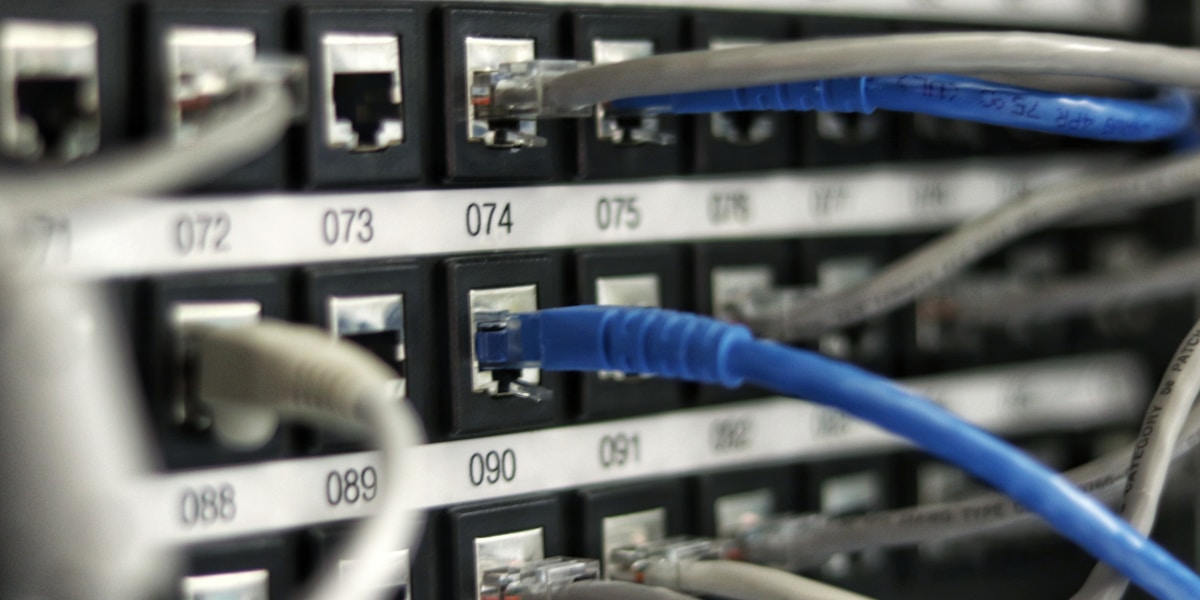
Fiber optic cabling delivers the bandwidth and reliability that modern networks demand. Whether you’re connecting buildings across a campus, building out data center infrastructure, or future-proofing your network for growing bandwidth requirements, fiber work requires specialized expertise, equipment, and documentation.
We help plan and coordinate fiber optic infrastructure around TIA/EIA standards, termination requirements, testing expectations, and closeout records. Where licensing or trade scope is required, implementation should be performed by appropriately licensed California contractors.
What We Plan
Fiber Types
- Single-Mode Fiber (OS2) — Long-distance connections, carrier demarcation, and high-bandwidth backbone infrastructure
- Multi-Mode Fiber (OM3/OM4) — Data center connections, building risers, and campus distribution
- OM5 Fiber — Future-ready infrastructure supporting wavelength division multiplexing
Termination Methods
- Fusion Splicing — Lowest loss, highest reliability permanent connections
- Mechanical Splicing — For repairs and situations where fusion isn’t practical
- Pre-Terminated Assemblies — Factory-terminated cables for consistent performance and fast deployment
- Field Termination — On-site termination with proper polishing and testing
Cable Types
- Indoor/Outdoor Rated — Appropriate cable construction for the installation environment
- Armored Fiber — Protected cables for harsh environments or direct burial
- Plenum-Rated — Fire-safe construction for air-handling spaces
- Loose Tube and Tight Buffer — Right construction for the application
Why Professional Fiber Planning Matters
Fiber optic work requires specialized skills and equipment. Common problems with poorly planned or poorly executed fiber projects include:
- Poor Connectorization — Dirty or damaged end faces causing high loss and reflectance
- Bend Radius Violations — Cables routed too tightly, causing attenuation and potential fiber breaks
- No Documentation — Fiber routes unknown, making troubleshooting impossible
- Mixed Fiber Types — Incompatible fiber types causing modal dispersion and link failures
We specify appropriate testing and closeout requirements, including OTDR testing, optical power measurements, connector inspection expectations, and labeling that matches the delivered fiber schedule.
Testing & Certification
Fiber projects should include comprehensive testing:
Tier 1 Testing
- Insertion Loss — Verifying total link loss is within specifications
- Optical Power — Confirming sufficient signal strength for the application
- Polarity — Ensuring proper transmit/receive pairing
Tier 2 Testing (OTDR)
- Reflectance Analysis — Identifying connector quality and potential problems
- Event Location — Mapping splice points, connectors, and any anomalies
- Attenuation Profile — Characterizing the complete fiber link
Test results should be documented and delivered with the project, providing a baseline for future troubleshooting and verification.
Documentation Deliverables
- Fiber Route Drawings — As-built documentation showing fiber pathways and connection points
- Fiber Schedules — Complete listing of fiber strands, endpoint connections, and assignments
- OTDR Traces — Saved traces for every fiber providing a performance baseline
- Connector Inspection Images — Microscope images documenting end face quality
- Test Reports — Certification results for every fiber link
Industries We Serve
Our fiber optic planning services support:
- Data Centers & Colocation — High-density fiber infrastructure meeting facility standards
- Campus Environments — Building-to-building connections and backbone infrastructure
- Healthcare Facilities — Reliable infrastructure for imaging, records, and clinical systems
- Industrial & Manufacturing — Fiber backbone for production environments
Our Process
- Site Survey — Assess existing infrastructure, identify pathways, and understand requirements
- Design — Create detailed plans for fiber routes, splice points, and terminations
- Implementation Coordination — Scheduled work aligned with TIA/EIA-aware requirements
- Testing — Comprehensive Tier 1 and Tier 2 testing of all fibers
- Documentation — Complete as-built package with test results and traces
Contact us for a site assessment and proposal for your fiber optic planning project.
Documented infrastructure coordination
Commercial cabling and infrastructure projects are planned around the records future IT teams, facilities teams, and approved trade partners need.
- Coordination with appropriately licensed California contractors where required
- TIA/EIA-aware planning and implementation standards
- Fluke or equivalent cable testing and certification when included in scope
- As-builts, cable schedules, labeling keys, and closeout photos